

Grade 1 - Alberta Language - Lessons/Workbook Mega Bundle
Grade 1 - Alberta Language - Lessons/Workbook Mega Bundle
Interested in a bundle? Shop below instead!
Couldn't load pickup availability
This mega bundle provides everything you need to teach all the units in the Grade 1 Alberta Language Curriculum.
With your purchase, you will receive lesson slides that follow the 3-Part lesson format, engaging your students from start to finish. You will also receive the workbooks, which contain fun activities and worksheets for your students to demonstrate their understanding.
Writing Unit
Workbook
Some of the concepts that are covered:
- Letter Formation Practice: Correct patterns, size, spacing
- Word Printing Activities: Emphasizing placement and clarity
- Basic Sentence Structure: Fundamental sentence-writing guidelines
- Descriptive Sentence Development: Enhancing simple sentences
- What is a message?
- Purpose and audience of messages
- Peer message sharing – writing a message to a classmate
- Classroom rules poster – writing classroom rules
- Scrambled Sentences: Organizing jumbled words correctly
- Writing in Voices: Expressing different tones
- Sentence Picture Prompts: Visual writing inspiration
- Paragraph Writing Basics: Main idea focus
- Topic Sentence Crafting: Starting paragraphs effectively
- Concluding Sentence Techniques: Ending paragraphs clearly
- Paragraph Publishing Steps: Editing and finalizing
- Text Form Exploration: Discovering writing varieties
- Idea Brainstorming Methods: Generating creative content
- Mind Mapping: Visual idea organization
- Procedural Writing Structure: Step-by-step instruction writing
- Sequencing Tasks: Ordering instructions logically
- Publishing Instructions: Finalizing procedural texts
- Formal Letter Framework – Using appropriate greeting, signature
- Informal Letter Style
- Understanding Writing Voices: Audience-tailored writing
- Narrative Elements: Setting and characters
- Expressing Emotions: Describing feelings in writing
- Narrative Structure: Beginning, middle, end
- Publishing Narratives: Revising personal stories
- Opinion Debate Prep: Discussing varied topics
- Fact vs. Fiction: Strengthening arguments
- Researching – Completing a weather report
- Researching – Identifying the planets in our solar system
- Persuasive Fact Finding: Researching to convince
- Publishing Opinions: Finalizing persuasive texts
- Poetry Writing: Acrostic, haiku, limericks
- Report Crafting: Research, structure, publish
- Answer pages for all activities
Reading Comprehension Unit
Workbook
Some of the concepts that are covered:
- What is a message?
- What is reading comprehension?
- Before reading: comprehension strategies – activating prior knowledge and reasons for reading
- During reading: comprehension strategies – questioning, making connections, inferences, predictions, visualizing
- After reading: comprehension strategies – summarizing, making inferences, visualizing
- Reading strategies: chunking words (compound words) and stretching words
- Independent reading texts and response questions
- Independent reading response package – booklet
- Imaginary (fiction) versus real (non-fiction) messages
- Environmental print – identify signs, symbols, and text
- Visualizing texts – listening to stories written above grade level
- Letter writing – making inferences
- Email versus letters – text forms and text patterns
- Sentence structure in letter writing
- Narratives – myths
- Indigenous cultural stories
- Narrator’s point of view
- Different points of view in stories
- Imaginary stories: fairy tales, fables, and realistic stories
- Literary devices in narratives – alliteration, onomatopoeia, and rhymes
- Sequencing the plot of a short story
- Cause and effect in short stories
- Procedural writing – following instructions to draw and make objects
- Comparing procedural writing – with visuals and without
- Text features in reports – headings, subheadings, table of contents, charts, pictures
- Summarizing reports – main idea
- Poetry – haiku, limerick, acrostic, and rhyming poems
- Visualizing poetry
- Indigenous poetry – critical thinking
- Literary devices in poetry – rhyme and alliteration
- Book reviews – finding bias and different points of view
- Graphic texts – timelines, comics, diagrams, infographics, maps
- Biographies – Isaac Newton, Tooth Fairy, Chris Hadfield, Mother Teresa
- Researching facts about a famous person
- Writing a biography about a friend
- Answer pages for all activities
Language Conventions and Vocabulary Unit
Workbook
Some of the concepts that are covered:
- Printing Practice
- Mastering Alphabetic Principles and Letter Identification
- Vowel and Consonant Recognition
- Identifying Beginning Sounds and Ending Sounds
- Understanding Vowel Sounds and Silent 'E' Rules
- Enhancing Reading Accuracy with Phonics
- Developing Spelling Proficiency and Word Structure
- Position-Based Tendencies
- Synonyms and Antonyms
- Compound Words
- Alliteration and Rhyming Words
- Spelling Patterns – VC, CVC, VCe
- Understanding and Using Base Words
- Exploring Word Formation with Prefixes and Suffixes
- Distinguishing Sentence Types and Applying Correct Punctuation
- Differentiating Singular and Plural Nouns
- Recognizing Common Adjectives
- Verbs: Tense, Agreement, and Usage
- Understanding Common Adverbs
- Identifying Common Conjunctions
- Expanding Vocabulary with Suffixes (-s, -es, -ies, -ing, -ed)
- Enhancing Language with Prefixes (un, re, dis, non)
- Sentence Construction: Fragments vs. Complete Sentences
- Types of Sentences: Interrogative, Exclamatory, Imperative, Declarative
- Capitalization Rules: Beginning of Sentences
- Vocabulary Development and Sentence Building
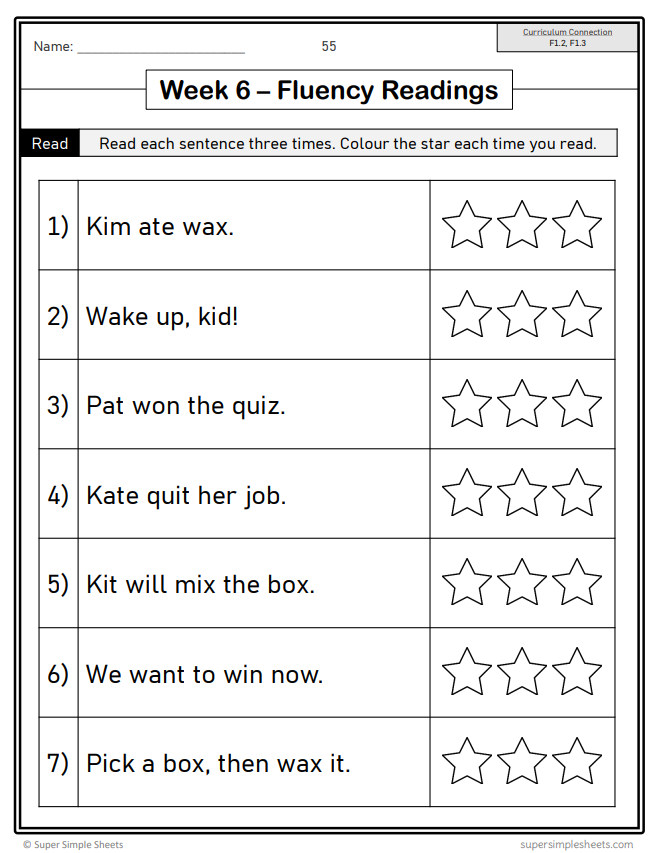
- Fluency readings for each week using the word list for that week
- Weekly quizzes (30 different assessments)
- Answer pages for all activities
Google Lesson Slides
Grade 1 - Google Lesson Slides - Alberta Language Curriculum. This resource is packed with all the lessons you need to teach the Grade 1, Alberta Language Curriculum.
We have structured these lessons to follow the popular 3-Part Lesson format. By using these lessons, you will be provided with learning goals, discussion questions, relevant YouTube videos, interactive slides, exit cards, and more. Check out the variety of activities you'll receive below.
Part 1: Minds On!
- Learning Goals
- Discussion Questions
- Polls/Surveys
- Picture Prompts
- Jokes and Riddles
- Relevant Quotes
Part 2: Action!
- Interactive Activities
- Drag and Drop
- Fill in the Blanks
- Matching
- Sorting
- Polls/Surveys and Graphing
- Embedded YouTube Videos
Part 3: Consolidation
- Exit Cards
- 3-2-1 Reflections
- One Word Reflections
- Act It Out!
- Quick Draw
- One Sentence Summary
After purchasing this resource, you will be able to download copies of the Google Slides for the three different units to your Google Drive. From there, you can complete these lessons with your class, and/or assign these slides in Google Classroom.