

Grade 4 - Alberta Language - Lessons/Workbook Mega Bundle
Grade 4 - Alberta Language - Lessons/Workbook Mega Bundle
Interested in a bundle? Shop below instead!
Couldn't load pickup availability
This mega bundle provides everything you need to teach all the units in the Grade 4 Alberta Language Curriculum.
With your purchase, you will receive lesson slides that follow the 3-Part lesson format, engaging your students from start to finish. You will also receive the workbooks, which contain fun activities and worksheets for your students to demonstrate their understanding.
Writing Unit
Workbook
Some of the concepts that are covered:
- Types of text forms – when to use each one (narratives, letters/emails, persuasive, comic strips, reports, etc.)
- Experiment – writing with planning time versus writing without planning time (no brainstorming)
- Personal voice in writing
- Word choice – how word choice affects our writing voice
- Improving sentences with descriptive word choice
- What is fluent writing?
- Revision – is my writing fluent?
- Writing using different sentence lengths – simple versus compound/complex sentences
- How to write a paragraph – topic sentence (hook), body, conclusion
- Formal versus informal letter writing – voice in our writing
- Purpose and audience in letter writing – effect on our voice
- Narrative writing – beginning, middle, end
- Writing using figurative language – personification, analogy, and idiom
- Analyzing quality stories – building success criteria
- Using quotations in our narratives – dialogue
- Character personalities – writing dialogue that matches personality
- Activity – Story Swap Revision Party
- Understanding persuasive writing
- Activity – Being Persuasive
- Understanding bias in persuasive writing
- Assignment – advertising a new invention
- Report writing – a quick guide
- Activity – Idea Factory
- Writing reports – using the facts provided to organize a report
- How to research effectively
- Questioning research process – asking questions related to topics and researching answers
- Ethical use of research – asking permission, citing, fair and accurate representation
- Activity – Online Treasure Hunt
- Report Writing – writing strong introductions and conclusions
- Types of poems – Haiku, Limerick, rhyming poems
- Assignment – writing a poetry children’s book
- Cursive writing – Limerick
- Examining bias in reviews
- Practicing summaries in book review writing
- Publishing a book review
- Comic strips – onomatopoeia and illustrating graphic texts
- Assignment - creating an online comic strip
- Biographies – cross curricular connections: Thomas Edison (lightbulb) and Thanadelthur (social studies)
- How to cite where we find research – bibliography
- Rubrics for all writing assignments
- Success criteria for all writing assignments – used for student self-assessments
- Cursive writing package – all letters (upper and lowercase)
- Answer pages for all activities
Reading Comprehension Unit
Workbook
Some of the concepts that are covered:
- What are text forms?
- Different types of literary forms – novels, media texts, and journal entries
- Before reading: comprehension strategies – activating prior knowledge and reasons for reading
- During reading: comprehension strategies – questioning, making connections, inferences, predictions, visualizing
- After reading: comprehension strategies – summarizing, synthesizing, making inferences, visualizing
- Genres in text forms – fiction and non-fiction
- Sub-forms of genres – humour, adventure, traditional literature, fantasy, mystery, science fiction, horror, etc.
- Traditional literature – fables, myths, folktales
- Letter writing – emails, formal and informal letters, writing with voice
- Narratives – use of literary devices: personification, analogy, idiom
- Perspective in narratives – first-person, second-person, and third-person narration
- Narratives – subplots and flashbacks in story writing
- Major and minor characters in narrative writing
- Structure in stories – beginning, middle, end
- Personal wonderings in stories – what would you do differently?
- Making inferences about persuasive texts
- Text features in reports – index, glossary, timelines, headings, subheadings, graphics, etc.
- Using graphics and images in reports to help the reader understand the text
- Synthesizing reports – Climate Change
- Problem/solution reports and cause and effect reports
- Summarizing reports – determining the main idea and supporting details
- Use of infographics, timelines, maps, diagrams, and pictures in reports
- Literary devices used in poetry – personification, idiom, and analogy
- Assignment – examining poems written by Indigenous authors
- Understanding haiku, limericks, acrostic poems, cinquain poems, free verse, concrete, and rhyming poems
- Poetic terms – stanza, verse, free verse, rhyming, syllables, and rhythm
- Reading different styles (voices) in book reviews
- Text features in comics, infographics, memes, and maps
- Text features in biographies – using a glossary and indexes to understand a biography
- Biographies – Jane Goodall, Charles Darwin, Archimedes, Hiawatha: index and glossary
- Autobiographies – Justin Trudeau and Bill Gates
- Procedural writing – text forms: lists, title, graphics, and labels
- How graphics improve procedural writing
- Following instructions – drawing a totem pole and a tipi
- Answer pages for all activities
Language Conventions and Vocabulary Unit
Workbook
Some of the concepts that are covered:
- Sentence structure: complete, fragments, compound, types, and clauses.
- Comprehensive parts of speech: nouns, verbs, adjectives, adverbs, and prepositions.
- Grammar construction: subject-verb agreement, coordinating conjunctions, and independent/dependent clauses.
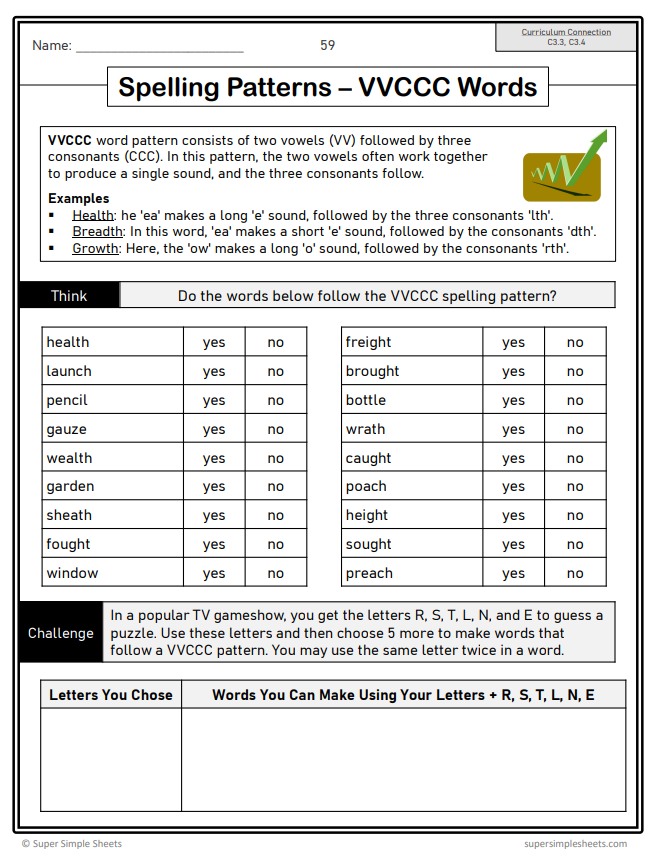
- Suffixes <er>, <es>, <r>, <ly>, <ing>, <ily>, <able>, <ible>, <ar>, <less> and more.
- Prefixes <dis>, <mis>, <non>, <pre>, <post>, <anti>, <auto>, <bio>, <inter>, <micro> and more.
- Vocabulary development: morphemes, prefixes, suffixes, and word origins.
- Punctuation mastery: commas, interjections, and end-of-sentence rules.
- Writing enhancement: cursive, personification, idioms, and analogies.
- Capitalization rules for proper nouns, proper adjectives, and abbreviations.
- Verb tense proficiency: perfect verb tense, interrogative, imperative, and idiomatic expressions.
- Sentence development: complex, compound-complex sentences, and correcting run-ons.
- Decoding strategies: syllable splitting and chunking for reading fluency.
- Figurative language depth: similes, metaphors, analogy, onomatopoeia, oxymorons, and personification.
- Pronoun use: adjectives, subjects, objects, and possessive constructions.
- Vocabulary precision: homophones, homonyms, antonyms, and silent letters.
- Literary devices: alliteration, ellipsis, and determiners.
- Spelling focus: commonly misspelled words, I before E rules, and exceptions.
- Quotation use in dialogue, capitalization, and comparison degrees.
- Vocabulary context clues for advanced word meaning deduction.
- Apostrophe application in contractions and possessives.
- Introducing lists with commas and colons effectively.
- Active and passive voice differentiation and use.
- Pronunciation and spelling: silent letters and challenging phonetic patterns.
- Analogy comprehension and creation for enriched understanding.
- Fluency practices: progressive sentence complexity for better comprehension.
- Quotation rules: dialogue integration and proper punctuation.
- Synonym spectrum: exact versus near-synonyms identification and use.
- Figurative versus literal language recognition and usage.
- Pronouns in depth: roles in sentences and advanced grammar.
- Punctuation for clarity: commas in series and direct address.
- Capitalization nuances in quotations and proper nouns.
- Fluency readings for each week to reinforce word list vocabulary
- Weekly quizzes (30 different assessments)
- Answer pages for all activities
Google Lesson Slides
Grade 4 - Google Lesson Slides - Alberta Language Curriculum. This resource is packed with all the lessons you need to teach the Grade 4, Alberta Language Curriculum.
We have structured these lessons to follow the popular 3-Part Lesson format. By using these lessons, you will be provided with learning goals, discussion questions, relevant YouTube videos, interactive slides, exit cards, and more. Check out the variety of activities you'll receive below.
Part 1: Minds On!
- Learning Goals
- Discussion Questions
- Polls/Surveys
- Picture Prompts
- Jokes and Riddles
- Relevant Quotes
Part 2: Action!
- Interactive Activities
- Drag and Drop
- Fill in the Blanks
- Matching
- Sorting
- Polls/Surveys and Graphing
- Embedded YouTube Videos
Part 3: Consolidation
- Exit Cards
- 3-2-1 Reflections
- One Word Reflections
- Act It Out!
- Quick Draw
- One Sentence Summary
After purchasing this resource, you will be able to download copies of the Google Slides for the three different units to your Google Drive. From there, you can complete these lessons with your class, and/or assign these slides in Google Classroom.