

Grade 6 - Conventions & Vocabulary - Saskatchewan Language - Lesson/Work Bundle
Grade 6 - Conventions & Vocabulary - Saskatchewan Language - Lesson/Work Bundle
Interested in a bundle? Shop below instead!
Couldn't load pickup availability
Grade 6 - Language Conventions and Vocabulary Unit - Saskatchewan Language Curriculum - Lesson/Workbook Bundle. This bundle was created to provide everything you need to teach the Grade 6 Language Conventions and Vocabulary unit in the Saskatchewan Language Curriculum.
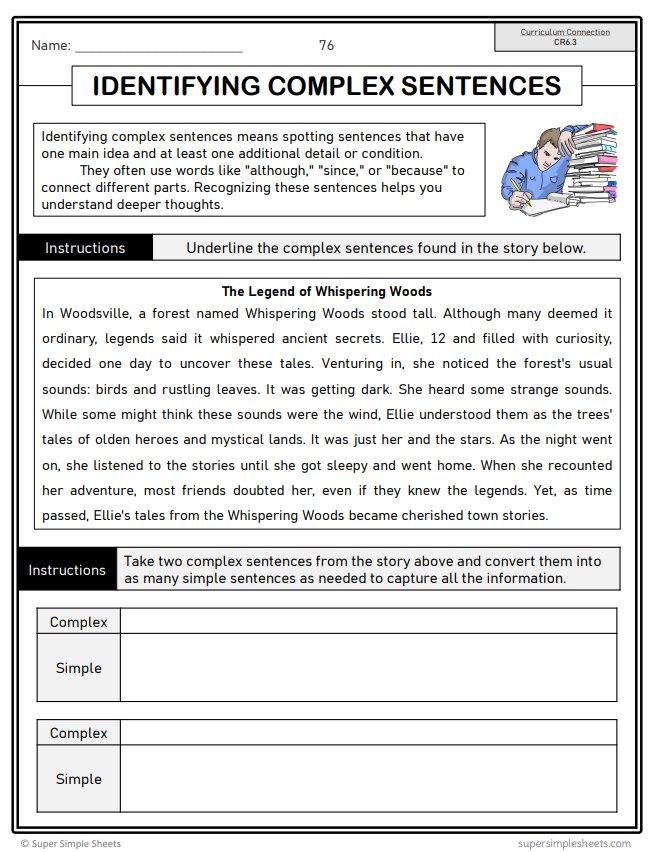
With your purchase, you will receive lesson slides that follow the 3-Part lesson format, engaging your students from start to finish. You will also receive the workbook, which contains fun activities and worksheets for your students to demonstrate their understanding.
Workbook Details:
This 453-page resource covers all outcomes and indicators related to conventions, spelling, and fluency in the Saskatchewan Language Curriculum (ELA).
Included in this unit are 30 weeks of ELA instruction, with weekly word lists that explicitly teach consonant clusters as well as vowel teams. Along with these Science of Reading principles, we have weaved in the outcomes and indicators students in grade 6 need to learn while working with these word lists.
Included in this resource are the outcomes and indicators within the goals below:
Comprehend and Respond (CR) – read fluently and demonstrate comprehension of grade-appropriate texts.
Compose and Create (CC) - spelling, grammar, capitalization, punctuation, and other conventions related to writing.
Assess and Reflect (AR) – reflect and set personalized goals related to writing, spelling, and reading fluency.
In addition, we have included a full-year long range plan that outlines what concepts from the curriculum you will be teaching each week, and what prefixes/suffixes/letter blends will be covered.
Some of the concepts covered:
- Suffixes: -en, -ize, -ing, -ly, -able, -less, -ment, -ful, -ness, -tion, -ous, -y, -ize, -ship and many more
- Prefixes: pro-, com-, con-, en-, oc-, re-, dis-, pre-, ex-, in-, non-, sub-, inter-, anti-, mis-, super-, and many more
- Reading strategies – questioning, predicting, summarizing, making inferences, and visualizing activities
- Complete sentences versus fragments
- Simple and compound sentences
- Using independent and dependent clauses in sentences
- Parts of speech – nouns, verbs, adjectives, adverbs, pronouns, prepositions, conjunctions, interjections
- Run-on sentences
- Four types of sentences – declarative, interrogative, exclamatory, imperative
- Conjunctions – FANBOYS
- Building complex sentences and subordinating conjunctions
- Compound-complex sentences
- Literary devices – similes, metaphors, personification, symbolism, and imagery
- Creating complex sentences with adjective clauses/relative clauses
- Nouns that are gerunds
- Distinguishing and converting between active and passive voice
- Palindromes
- Commas with clauses and commas in a list
- Colons for introducing a list, colons in formal letters, colons in memo salutations
- Colons to give an explanation or an example
- Semicolons versus commas
- Commas with direct address, commas with appositives, commas after transitional words
- Vocabulary – using context clues to read unfamiliar words
- Subject-verb agreement
- Identifying synonyms
- Using expression and intonations while reading
- Capitals for historical periods or events
- Proper adjectives and capitalization
- Regional dialects – standard Canadian English versus American English, formal/informal registers, slang
- Formal and informal language – slang, social media texts, academic language
- Reconstructing texts – changing a news article into a short story or a formal text message into an informal one
- Word origins – words influenced by people, places, and events in history
- Fluency readings for each week to reinforce word list vocabulary
- Weekly quizzes (30 different assessments)
- Answer pages for all activities
Google Lesson Slides
Grade 6 - Language Conventions and Vocabulary Unit - Google Lesson Slides - Saskatchewan Language Curriculum. This resource is packed with all the lessons you need to teach the Language Conventions and Vocabulary, Grade 6, Saskatchewan Language Curriculum.
We have structured these lessons to follow the popular 3-Part Lesson format. By using these lessons, you will be provided with learning goals, discussion questions, relevant YouTube videos, interactive slides, exit cards, and more. Check out the variety of activities you'll receive below.
Part 1: Minds On!
- Learning Goals
- Discussion Questions
- Quotes
Part 2: Action!
- Interactive Activities
- Drag and Drop
- Fill in the Blanks
- Matching
- Drawing
- Writing
Part 3: Consolidation
- Exit Cards
- Quizzes
- Reflection
After purchasing this resource, you will be able to download a copy of this file to your Google Drive. From there, you can complete these lessons with your class, and/or assign these slides in Google Classroom.