

Grade 6 - Living Systems - Alberta Science - Lesson/Workbook Bundle
Grade 6 - Living Systems - Alberta Science - Lesson/Workbook Bundle
Interested in a bundle? Shop below instead!
Couldn't load pickup availability
Grade 6 - Living Systems (Ecosystems) Unit - Alberta Science Curriculum - Lesson/Workbook Bundle. This bundle was created to provide everything you need to teach the Grade 6 Living Systems unit in the Alberta Science Curriculum.
With your purchase, you will receive lesson slides that follow the 3-Part lesson format, engaging your students from start to finish. You will also receive the workbook, which contains fun activities and worksheets for your students to demonstrate their understanding.
Workbook Details:
This resource covers all the outcomes in the Grade 6, Alberta Science Curriculum – Living Systems (Ecosystems) unit.
There are 192 activity sheets that cover the outcomes in the science curriculum. This comprehensive unit contains readings, hands-on activities, true/false, diagrams, assignments, experiments, STEM activities, coding, exit cards, reflections, and more. There is also a unit test and answer pages for all activities!
Some of the concepts that are covered:
- What is an ecosystem?
- Biotic components and abiotic components of ecosystems
- Terrestrial ecosystems and aquatic ecosystems
- Experiment – designing a zoo enclosure
- STEM – paying for the zoo enclosure
- Ecosystem interactions – how everything connects
- Decomposers and detritivores – important part of ecosystems
- Climate, vegetation, animals, size, geography locations of different ecosystems: arctic, desert, grasslands, forests, and wetlands
- Biotic and abiotic interactions in different ecosystems – arctic, desert, grasslands, forests, wetlands
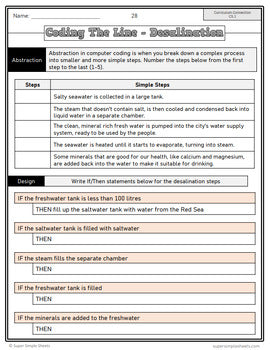
- Coding activity – Building The Line in Saudi Arabia: coding the desalination process and solar panels
- Ecosystem profiles: biotic and abiotic components around a log
- Activity – making a bird feeder
- What is biodiversity?
- Longitudinal biodiversity gradient – more biodiversity at the equator, less at the poles
- Describing how the abiotic components of an ecosystem affects the biodiversity
- Biodiversity in deserts, forests, grasslands, and oceans
- Experiment – making a model ecosystem in a bottle
- Technologies used to monitor ecosystems
- Coding activity – remote control photography
- STEM assignment – creating a robot camera for monitoring ecosystems
- Ecosystems and greenhouse gases
- Photosynthesis – chlorophyll, storing starches, producing oxygen
- Experiment – demonstrating the role of light in photosynthesis
- Experiment – demonstrating how sugars are stored as starch
- Experiment – demonstrating how oxygen is produced during photosynthesis
- The role of plants in an ecosystem – producing oxygen, absorbing carbon dioxide, cleaning ecosystems
- Experiment – soil erosion model
- Humans need plants – clothing, buildings, energy, medicine, oxygen, food
- Indigenous use of plants – food, medicine, shelter, clothing
- The offering of tobacco – harmony, giving back, respect, sustainability
- Unit test
- Answer pages for all activities
Google Lesson Slides
Grade 6 - Living Systems (Ecosystems) Unit - Google Lesson Slides - Alberta Science Curriculum. This resource is packed with all the lessons you need to teach the Living Systems Unit, Grade 6, Alberta Science Curriculum.
We have structured these lessons to follow the popular 3-Part Lesson format. By using these lessons, you will be provided with learning goals, discussion questions, relevant YouTube videos, interactive slides, exit cards, and more. Check out the variety of activities you'll receive below.
Part 1: Minds On!
- Learning Goals
- Discussion Questions
- Polls/Surveys
- Picture Prompts
- Jokes and Riddles
- Relevant Quotes
Part 2: Action!
- Interactive Activities
- Drag and Drop
- Fill in the Blanks
- Matching
- Sorting
- Polls/Surveys and Graphing
- Embedded YouTube Videos
Part 3: Consolidation
- Exit Cards
- 3-2-1 Reflections
- One Word Reflections
- Act It Out!
- Quick Draw
- One Sentence Summary
After purchasing this resource, you will be able to download a copy of this file to your Google Drive. From there, you can complete these lessons with your class, and/or assign these slides in Google Classroom.