

Grade 6 - Matter Unit - Alberta Science - Lesson/Workbook Bundle
Grade 6 - Matter Unit - Alberta Science - Lesson/Workbook Bundle
Interested in a bundle? Shop below instead!
Couldn't load pickup availability
Grade 6 - Matter Unit - Alberta Science Curriculum - Lesson/Workbook Bundle. This bundle was created to provide everything you need to teach the Grade 6 Matter unit in the Alberta Science Curriculum.
With your purchase, you will receive lesson slides that follow the 3-Part lesson format, engaging your students from start to finish. You will also receive the workbook, which contains fun activities and worksheets for your students to demonstrate their understanding.
Workbook Details:
This product was created to cover the NEW Alberta 2023 Science Grade 6 Curriculum – Strand 1 - Matter Unit.
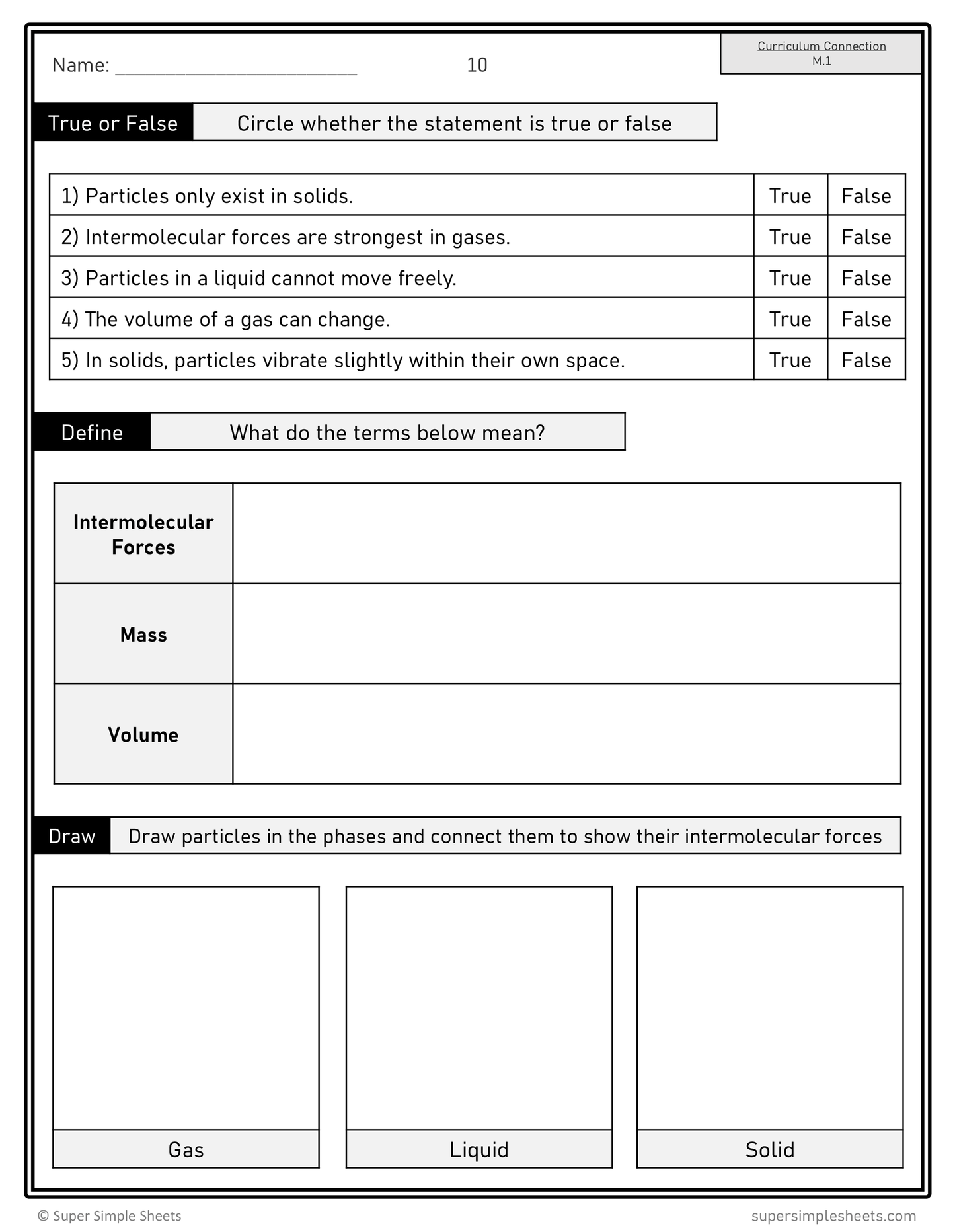
There are 114 activity sheets that cover the outcomes in the NEW science curriculum. This unit contains many fun activities, including readings, experiments, assignments, matching, true or false, and coding.
We have added computer science activities as well to cover the outcomes in the NEW science curriculum. Check out the preview of this unit to learn more about how it can benefit your students.
Some of the concepts that are covered:
- The particle theory of matter
- Intermolecular forces – attraction of particles
- Changes in state involving heat
- Melting point
- Experiment – testing the melting point of ice
- Boiling point
- Freezing point
- Real-world connection - Freezing rain
- Phase changes – changes in volume but not mass
- Experiment – testing the mass of solids versus liquids (ice versus liquid water)
- Evaporation – particle movement and attraction
- Experiment – testing evaporation in different settings
- Condensation – particle movement and attraction
- Experiment – testing condensation
- Thermal expansion of gases – particle movement and volume
- Experiment – testing thermal expansion of gases
- Thermal expansion of liquids – how a thermometer works
- Experiment – making a thermometer
- Thermal expansion of solids – railway tracks, sidewalks, glass
- Potholes – freeze/thaw process and expansion/contraction
- Real-world connection – DuSable Bridge in Chicago
- Choosing the right materials in building
- Properties of solid water (ice) versus liquid water
- Ice is less dense than liquid water
- Floating ice is an insulator for aquatic life
- Experiment – testing the insulating properties of ice
- Density of water – Lake Turnover Effect
- Story – hypothesizing the effects of denser ice than liquid water
- Coding activities – what is abstraction in computer science?
- Abstraction activity – simplifying machines
- Coding an ice maker
- Abstraction flow chart – learning the shapes of a coding flow chart
- Programming a hair dryer using a flow chart
- STEM Assignment – making a water/ice related machine
- Unit test
- Answer pages for all activities
Google Lesson Slides
Grade 6 - Matter Unit - Google Lesson Slides - Alberta Science Curriculum. This resource is packed with all the lessons you need to teach the Matter Unit, Grade 6, Alberta Science Curriculum.
We have structured these lessons to follow the popular 3-Part Lesson format. By using these lessons, you will be provided with learning goals, discussion questions, relevant YouTube videos, interactive slides, exit cards, and more. Check out the variety of activities you'll receive below.
Part 1: Minds On!
- Learning Goals
- Discussion Questions
- Polls/Surveys
- Picture Prompts
- Jokes and Riddles
- Relevant Quotes
Part 2: Action!
- Interactive Activities
- Drag and Drop
- Fill in the Blanks
- Matching
- Sorting
- Polls/Surveys and Graphing
- Embedded YouTube Videos
Part 3: Consolidation
- Exit Cards
- 3-2-1 Reflections
- One Word Reflections
- Act It Out!
- Quick Draw
- One Sentence Summary
After purchasing this resource, you will be able to download a copy of this file to your Google Drive. From there, you can complete these lessons with your class, and/or assign these slides in Google Classroom.